
The President’s Militia
America’s National Guard is becoming a laboratory for executive power without oversight.
By Coleman Spencer
Boots in Washington
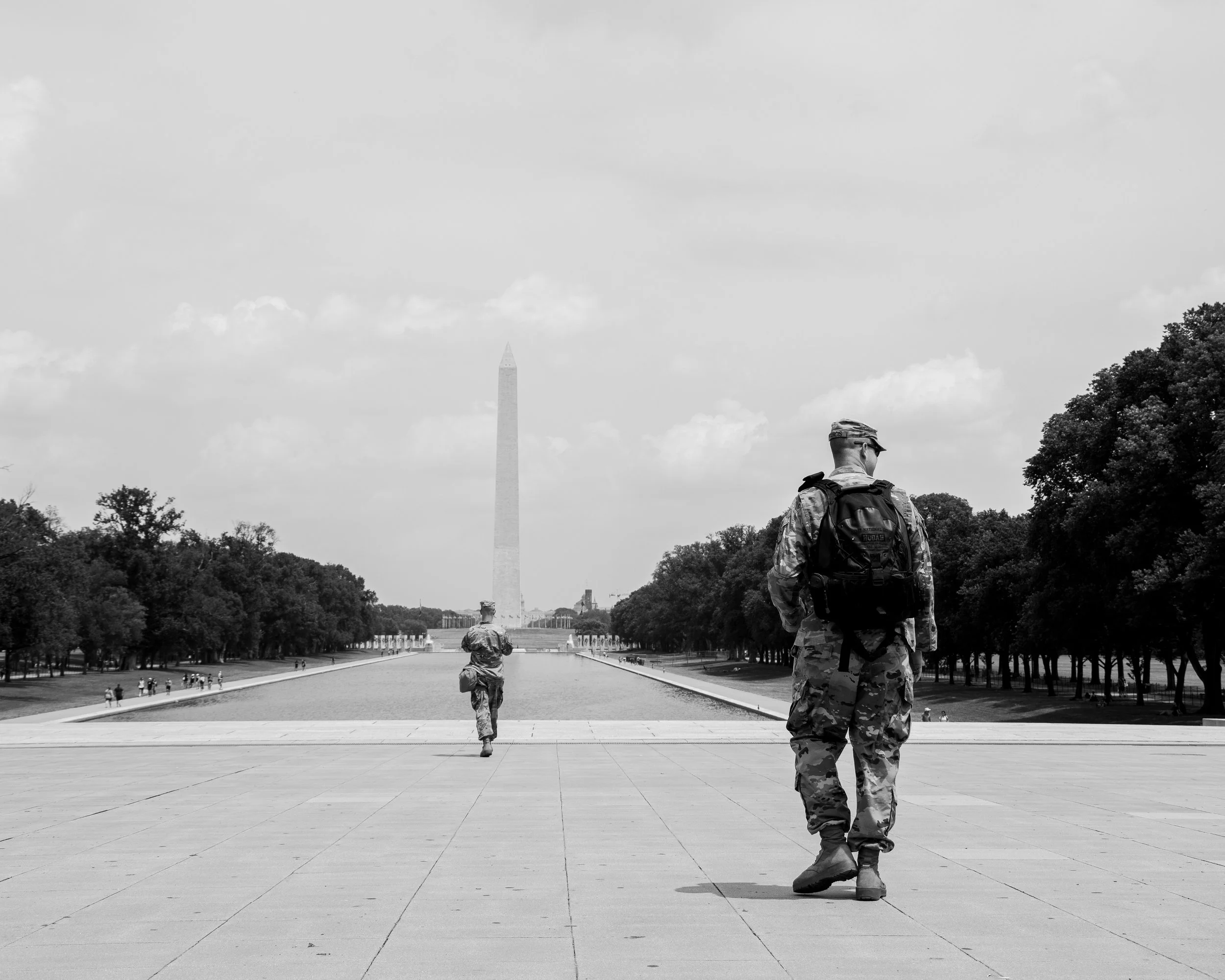
As 2025 draws to a close, clusters of National Guard troops stand on Washington’s street corners, bracing against the winter chill, idle in their fatigues. With no clear sense of mission or priority, they appear bored—but their presence is quite intentional. President Trump has ordered them into the nation’s capital as part of a broader, highly visible deployment across several major U.S. cities, primarily those run by vocal Democrats. The White House says their aim is to bolster ICE operations and deter crime. The practical effect is political theater, reviving a tactic Trump first experimented with during the George Floyd protests in the summer of 2020.
The 2020 Experiments
In 2020, a caustic mix of pandemic isolation, racial tension, and cultural virality materialized in widespread semi-violent protests across the country. President Trump sought a hardline response to these protests and rolled out a series of bold interventions. One early experiment saw masked three-letter agency officers in Portland leaping from unmarked vans to snatch protestors—an approach that generated confusion and fear, but little public order. Seeking a more reliable law-enforcement presence, many governors soon turned to their own National Guard units to help manage the unrest.
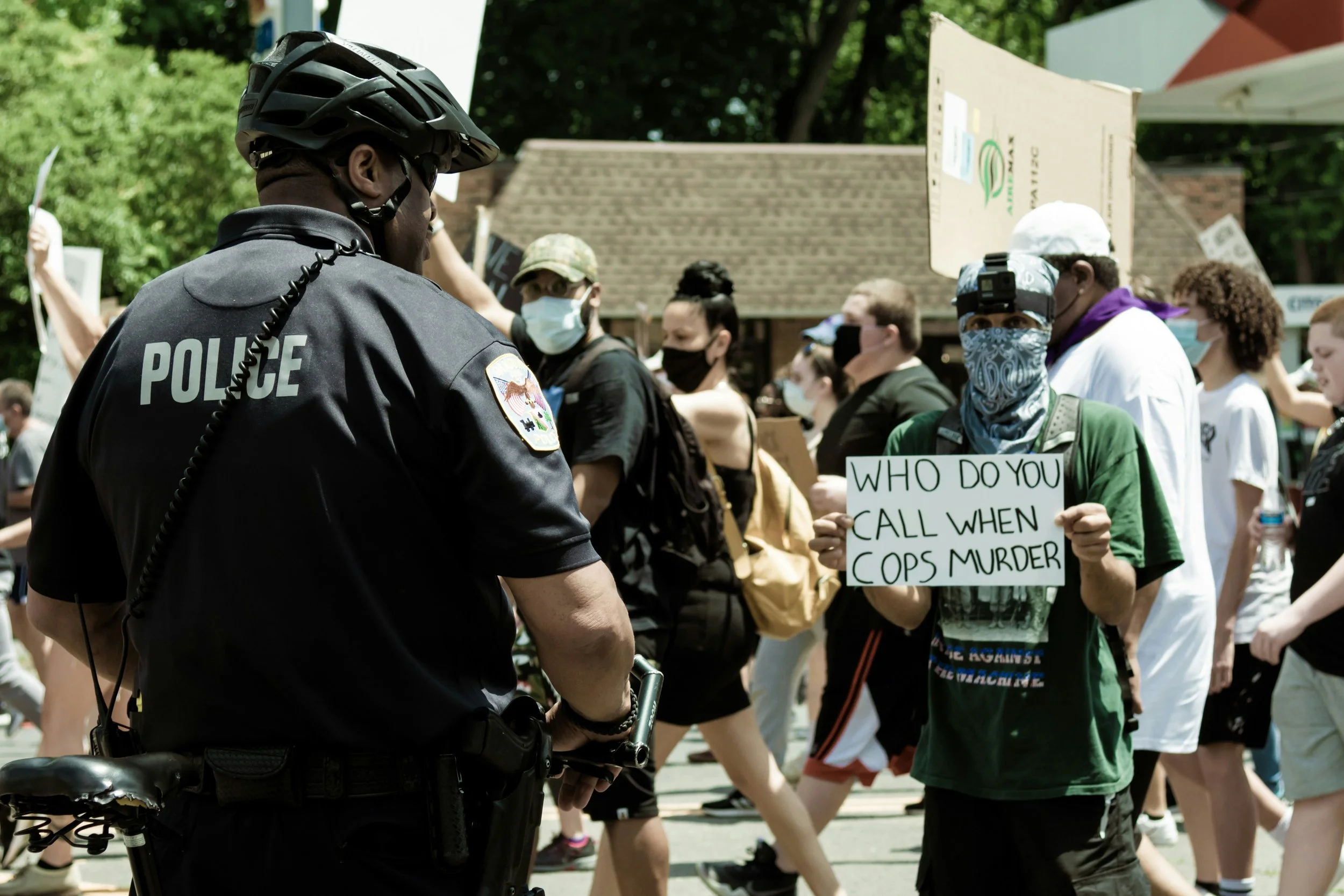
Photo by Johnell Pannell on Unsplash
The president took things a step further. Invoking Section 502(f) of Title 32 of the U.S. Code—a statute historically used for disaster relief and border emergencies—he sought a novel way to mobilize the country’s Guard units. He mustered troops from states willing to supply them and deployed them into other states that had not necessarily requested their presence. Legal scholars immediately flagged the maneuver as an exploitation of a statute never intended for routine domestic policing. Yet, because the law lacked explicit prohibitions, Trump pushed forward. Some states signaled a mixed reaction while others welcomed the assistance.
This untested intervention was a relief to many defense officials as Trump had initially threatened to invoke the Insurrection Act. This would have granted him a legal avenue for his initial appetite: to deploy warfighting troops from the Army’s elite 82nd Airborne Division against protesting citizens. He was dissuaded from doing so by then-Secretary of Defense Mark Esper, a Trump ally at the time, who advised strongly against such a wanton and unusual use of federal power on U.S. soil.
Trump fired Esper in November of that year. He has since referred to President Trump’s national security instincts as “illegal and dangerous,” and “inclined [toward fascism],” joining an ever-growing chorus of former national security officials who have expressed dire concern over Trump’s use of the military as a tool of personal power rather than one of constitutional obligation.
Several states—including California, Illinois, and Oregon—wanted no part of Trump’s Title 32 experiment and pursued court injunctions onTenth Amendment grounds. Among other rights, this Amendment reserves general policing authority to the states, giving them primary domain over public health and safety. For more than two centuries, courts have repeatedly affirmed this division, one that is constitutionally rooted in state sovereignty. Still, it is not absurd to think that the federal government should wish to intervene in truly extraordinary circumstances. To determine how extraordinary those circumstances must be, presidents of yesteryear have sought to faithfully interpret the framers of the Constitution, reinforcing time-honored norms of restraint.
The D.C. Prototype
Like in Chicago and Portland, Mayor Muriel Bowser sought to independently handle the relatively mild protests taking place in her city: the nation’s capital. Unlike Chicago and Portland, however, Washington, D.C. lacked the protection of state sovereignty. Preying on this vulnerability, the president swung his cudgel of power. He ‘Trumped’ Bowser, overriding her wishes and exploiting a vaguery in the Posse Comitatus Act, which restricts military personnel from interfering in domestic law enforcement. By borrowing non-federalized National Guard units from ‘red states’ to occupy the capital without the local government’s consent, he found a way to turn state militias into a traveling show of his individual will.
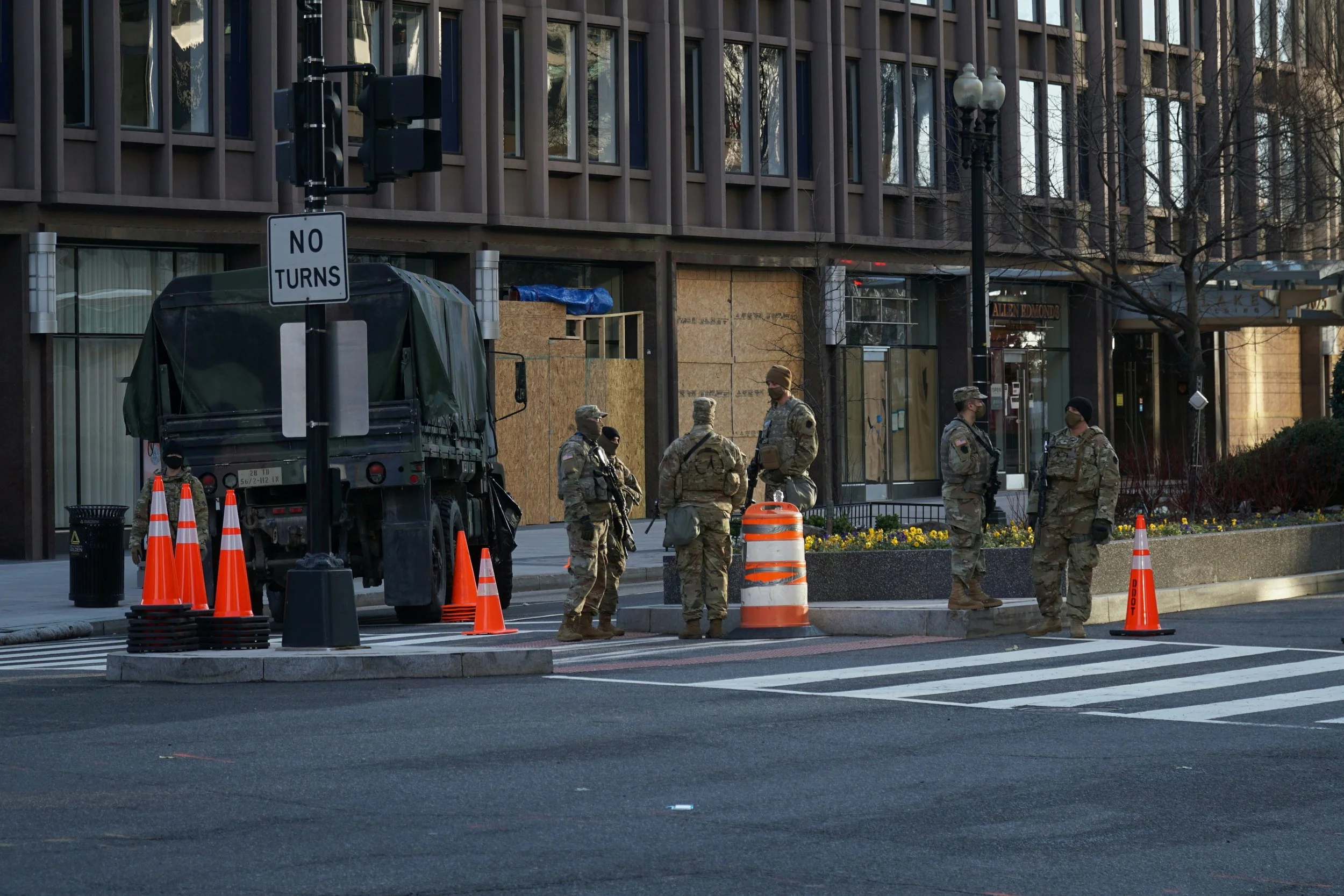
Photo by Ian Hutchinson on Unsplash
The Fair Context
Morally speaking, there was a genuine case to be made for military intervention (in cities that welcomed it) to help quell riots that amounted to as much as $2 billion in insured property damages and dozens of deaths. Many Democratic leaders at the time were taking the appropriate steps to try to restore order, but many of their public-facing spokespeople seemed woefully inept at relaying this commitment to the public. Their messaging often appeared ambivalent or timid in condemning the chaos. Moderates recoiled from rhetoric that imparted a noble cause on those who flipped cars and burned businesses. Too few Democrats could effectively condemn fashionable “ACAB” sentiments that were sweeping through their ranks and voter base. Systemic racism became a popular scapegoat for many of the ills in American society, and the right furrowed its brow. It was rational to be frustrated by this apathetic leadership.
Kyle Rittenhouse was arrogant, naïve, and reckless when he traveled to Kenosha, Wisconsin, hoping to intimidate rioters and ultimately killing two men who attacked him. Yet when many prominent voices on the left reduced his legally credible self-defense claim to nothing other than racist vigilantism, he predictably sought refuge among those eager to defend him. He found this warm embrace in the arms of right-wing Christofascists, grifters, and white nationalists, and soon built a lucrative new persona as a sort of mascot for their beliefs. In addition to supporting the ugly-but-valid merits of his legal defense, his new tribe subscribes to a constellation of much more sinister theocratic beliefs. These beliefs are incompatible with American Liberalism, and seem to be making a comeback in Trump-adjacent circles.
In many ways, Rittenhouse’s story is the story of the millions of voters who took up ranks for Trump in 2024. When the stewards of liberal democracy appear too ideologically captured to defend basic notions of order, right-wing demagogues most certainly will, bringing the rest of their ghoulish authoritarian ideas with them. We don’t get to pick and choose this political baggage, and America has a tendency to over-correct for its weaknesses.
Prototype Becomes Standard
Now, more than five years later, National Guard troops patrol D.C. again—but not in response to riots or a pandemic. Their official assignment is to deter crime and support federal and local law enforcement in a city whose violent crime rate has been trending downward for years. Their unofficial task is patently political, patently Trumpian. It’s a humiliation ritual designed to show force and political domination over Mayor Bowser, the same mayor who opposed him half a decade ago.
While the situation is largely playing out the same way in Washington, what’s new is Trump’s partnership with Texas Governor Greg Abbott. Together, they have used state militias to intervene in Los Angeles, Portland, and Chicago: all cities that explicitly oppose these deployments. This is a profound escalation: the president and a governor are effectively colluding to use one state’s armed forces to intimidate and gain leverage over other sovereign states. It tells the nation that no state is as sovereign as law and tradition would suppose—that a president may humiliate or override opposition leaders without invoking any formal emergency. It’s a message to all other governors and mayors across America: “If you fail to flatter, submit, or bend your institutions to the president’s liking, this could be your city next.”
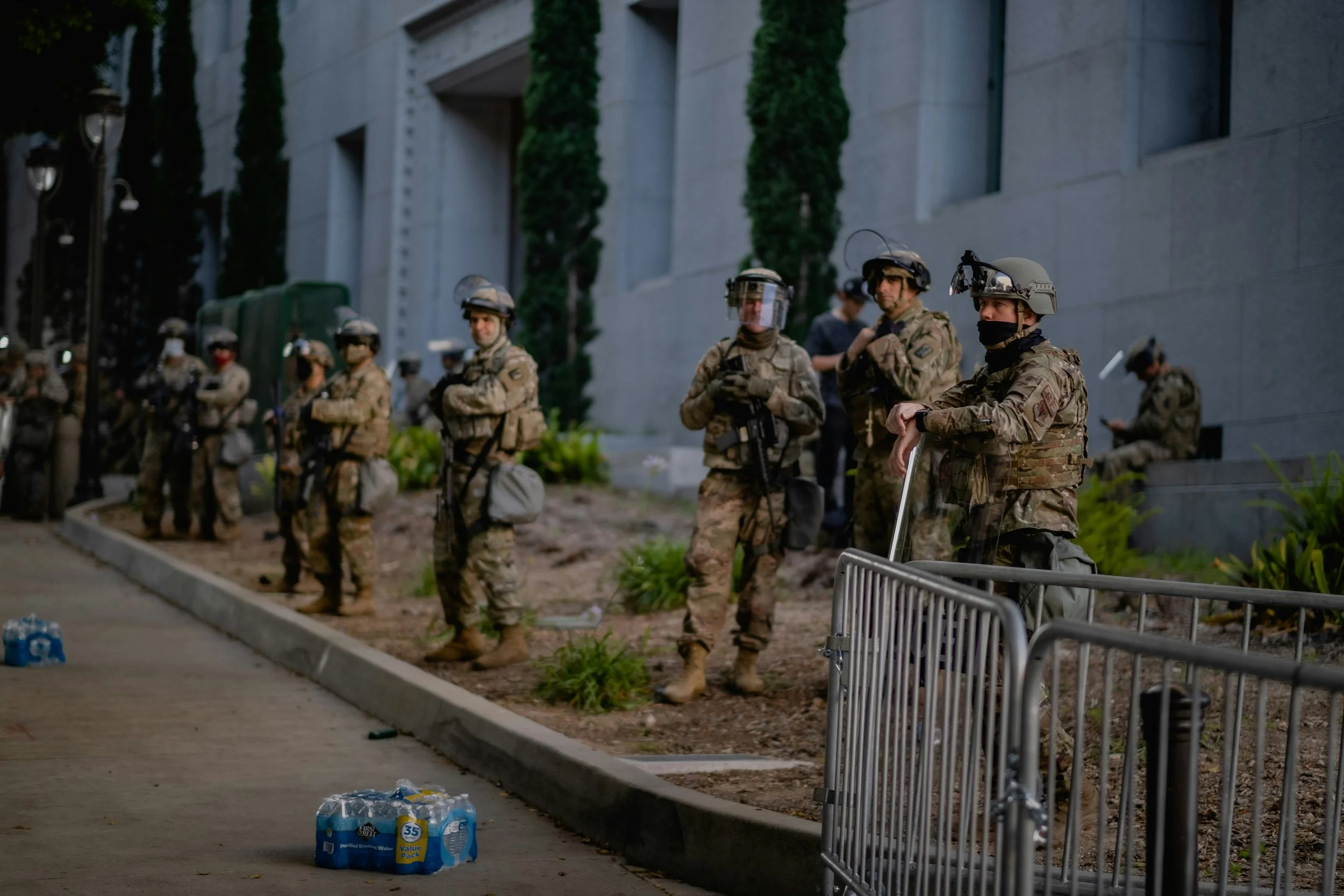
Photo by Levi Meir Clancy on Unsplash
A Sandbox for Power
It’s hardly relevant to debate the public safety merits of these Guard deployments. They almost certainly do make the neighborhoods they occupy safer from outbursts of street crime. They’re just a grotesquely expensive and inefficient method of doing so, and have little to do with “cleaning up” these affected cities long-term. What matters is that these operations are more about experimentation. They’re about creating a sandbox environment where the president can probe the outer limits of his authority, testing strategies that realize the quasi-legal, absolute limits of his power. They’re about studying how the courts, Congress, and the public will respond to the latest encroachment. They’re about seeing who will try to stop him, and how, so he can dodge those obstacles in some bolder act down the road.
Right now, it seems to be his favorite weapon against those whom he cannot simply fire. It is the kind of maneuver we have come to expect from him: a leader defined by his willingness to stress-test the norms and laws that serve as the guardrails of our democratic republic. Our laws alone are nothing without our traditions of restraint, built over generations, that have sustained a relatively stable Pax Americana since the end of the Second World War. If those norms collapse under force or neglect, laws become as malleable as dough.
Admittedly, Trump is only the latest in a series of presidents who have incrementally stretched executive power through aggressive interpretations of law, strategic appointments, and unilateral orders. But he is the first to openly treat that erosion of constraints as a political performance. He is certainly the first “conservative” to invent such shockingly oppressive new styles of government overreach. Does it get any more obvious than boots on the ground? His goal seems not only to wield the executive branch how he alone sees fit, but to normalize its limitless use.
Even if you support his policies now, ask yourself: Are you prepared for every tactic used today to become the playbook of any president who follows him?
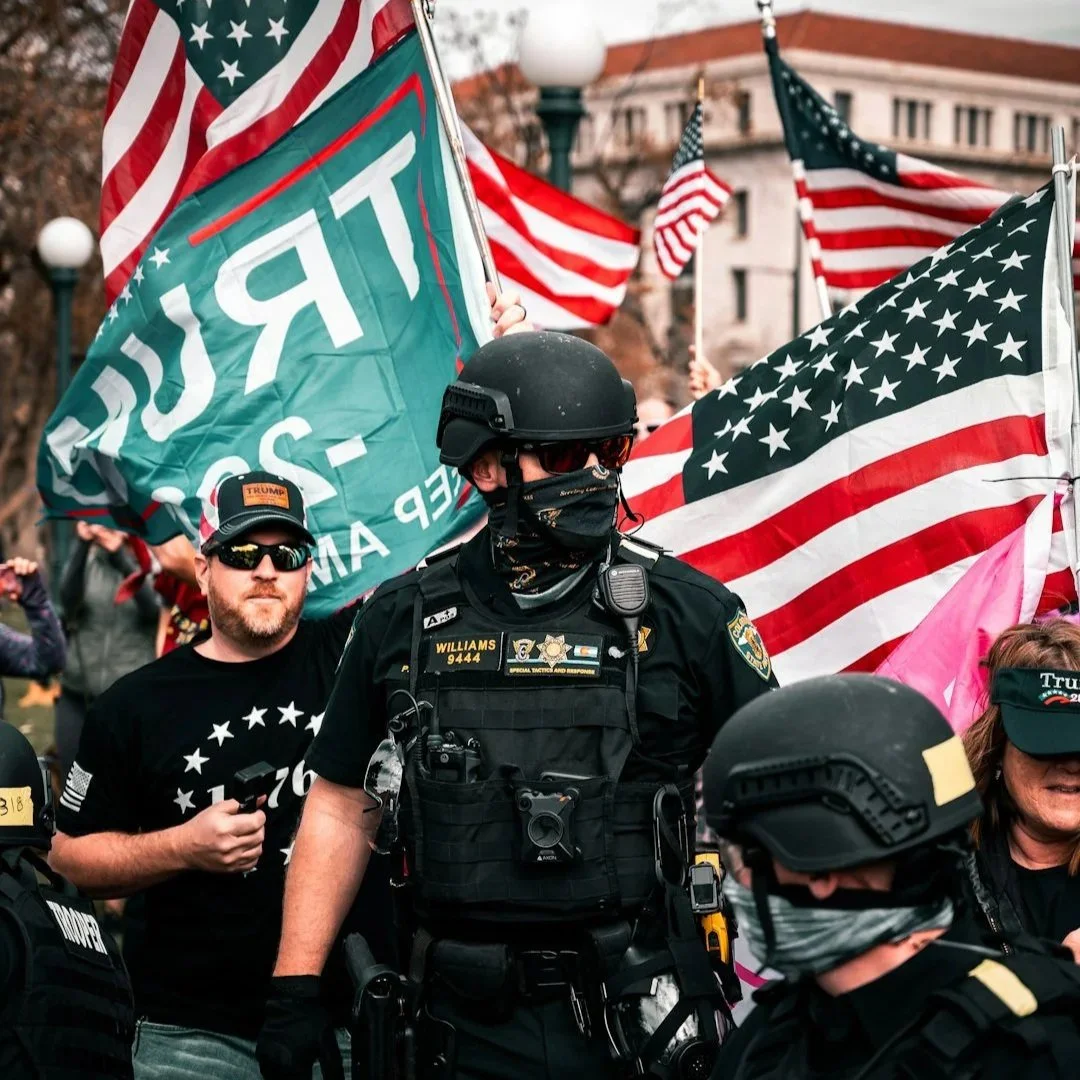
Photo by Colin Lloyd on Unsplash
The Seditious Six
In November, six Democratic lawmakers, all of whom have served in our nation’s armed forces, released a brief video reminding U.S. military personnel of their oath. There are several different versions of this oath, but they all say the same thing: that military personnel are to defend the U.S. Constitution and obey the orders of their superiors, so long as those orders are legal. In response, President Trump took to branding these lawmakers the “Seditious Six,” and publicly flirted with the idea of capital punishment. I watched the video repeatedly, prying for some subversive, treasonous message. There wasn’t one.
By this point, we should know better than to feign surprise at such a brazen misrepresentation, such a callous and ghastly retort from the leader of the Western world. Trump knows that he wields the power to whip his devotees into a frenzy, that with a few keystrokes he can credibly endanger the lives of six veteran lawmakers for the crime of publicly reiterating a job description. He knows his words and actions paint real-life targets on people. He proved his willingness to demonstrate this ability on occasions like theviolent January 6th insurrection, and when hepulled John Bolton’s security detail as one of the very first official acts of this second term. The implied message is obvious: loyalty to one’s most faithful reading of the Constitution is sedition if it stands in the way of Trump’s personal ambitions. At what point can Trump’s illegal, immoral, norm-shattering behavior threaten the willingness of Republicans in Congress to enable such a leader?
Seeking Courage
Members of Congress swear the same oath as the “Seditious Six.” Would reminding them of that fact warrant your execution? Is there a GOP spine left in Washington willing to remain accountable to the law of the land? When their “Don” is no longer in power, they may find that it was a mistake to untether themselves from everything it means to be lawful, traditional, and, well, conservative.
As of now, the president’s National Guard orders remain in The Twilight Zone. These orders are too abnormal to ignore, but apparently not illegal enough to provoke decisive checks from Trump’s legion of groveling enablers in the DoD, DoJ, and Congress. But we know from history, including the repudiation of “just following orders” after the My Lai massacre and the Nuremberg Trials, that legality in military conduct is not defined by senior approval alone. We require our troops to serve the Constitution with knowledge and conscience, not blind obedience.
We as citizens must serve our country with that same discipline. Only we get to decide when the goal post has been moved too far.