
Democratic Branding: Balancing Authenticity and Appeal
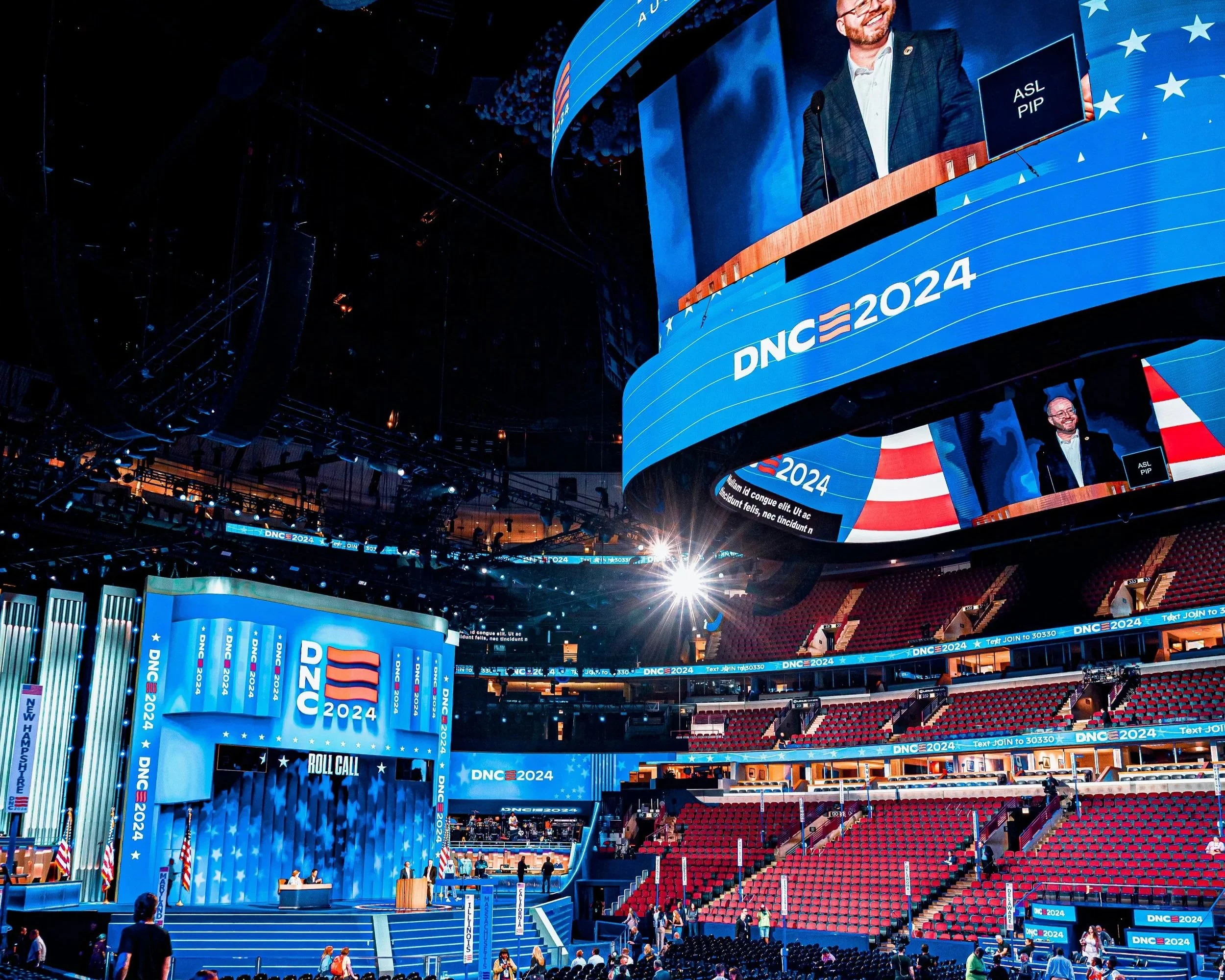
These are the votes that will win elections, and the Democrats must appeal to them, or else face total irrelevancy.
By Vencetia Flournoy
Introduction
Reflecting on the 2024 election cycle, there were obvious shortfalls and extreme misguidance that led to a failure for Democratic candidates. Given 107 days, the Harris campaign fell short of garnering enough support to beat Trump’s powerful MAGA cult of personality. Across the country, the GOP gathered House seats, Senate seats, and local offices, leading to a united government pursuing the Project 2025 agenda.
We cannot give all of the credit to the Republican Party’s election tactics and triumphs. The Democratic Party put up a weak fight and made many mistakes that ultimately cost them the 2024 election cycle across the board. These shortcomings have continued past the election as well, with shrinking ratings and fleeing supporters. According to Gallup, the Democratic Party’s ratings have dropped to 34% favorability, a record low dating back to 1992. Another poll from the Wall Street Journal found that 63% of voters viewed the Democratic Party as unfavorable, the lowest it has been in over three decades.
There are many theories as to why the Democratic name has gained unfavorability, including weak branding, an overemphasis on identity politics, and a general sentiment of “spinelessness”. If there is any hope for a future for Democrats, the party must take on an extreme rebranding as we approach the 2026 midterm election cycle. “The high road” branding is not working for Democrats, and the rise of a new tactic: one that is powerful, young, popular, and marketable.
One of the strongest ways to accomplish this is to appeal to moderate, independent voters. This voting body is continuously expanding, and over 40% of eligible voters now identify as independents, with over 60% identifying as “moderate” on the political spectrum. These are the votes that will win elections, and the Democrats must appeal to them, or else face total irrelevancy.
Strategy 1: Ditch Unpopular Policies
One pillar of the Democratic Party that has driven them to failure has been their inability to ditch policies that prove to be unpopular. To win elections, you must win voters. To win voters, you must have attractive policies.
Rethink Immigration Strategy:
Following the massive immigration crackdown from the Trump Administration, the Democrats have a unique opportunity to take back popular opinion on the issue. Over 79% of US adults believe immigration is a positive thing, and even the number of Republicans who supported less immigration dropped from 88% to 48%. With a middle ground strategy, the party can reject the previous image of supporting open borders and replace those policies with a median, tough-but-fair immigration strategy. This could mean reforming the system to provide easier pathways for legal citizenship status, while simultaneously embracing more conservative policies like providing more funding for border security and prioritizing national security.
Democrats have an opportunity to win back support on this issue, and if they want to succeed in the midterms, they must act on it.
Redefine Image on Crime Policy:
The statistics do not lie. About 81% of voters see crime as a major issue in US cities, and confidence in local police is up to 74% among US adults, holding a majority across all racial demographics.
Admittedly, some Democrats have already listened to voters on this issue, with Democrats in New York, Oregon, and New Mexico all considering or enacting tougher crime legislation in recent years. However, the overall image of the Democratic Party reads as weak on crime, driving away moderate voters who read this issue as pressing. To do this, Democrats should support law enforcement by incentivizing community involvement, identifying hotspots in cities, and focusing on intervention techniques in these locations.
Strategy 2: Total Rebranding
Changing policy strategies will help, but it is not enough to save the Democrats from their downfall. This will instead require aggressive and speedy marketing tactics to rebrand the party.
The Economy Party:
The economy was cited as an extremely important issue for 52% of voters in the 2024 election cycle, a high that has not been reached since the 2008 recession. The American people are struggling; they are struggling to pay bills, buy homes, find jobs, and create a financially stable life. If there is one rebrand the Democrats need more than anything, it is to gain back moderate voters and prove to themselves and to Americans that they have what it takes to fix our economy.
Whether or not you agree that the economy thrives more under Democratic leadership, the polling does not lie: Americans trust Republicans more on economic issues. People are being driven towards traditionalism and conservatism because of a culture of unaffordability, joblessness, and widespread unhappiness. For too long, Democrats have been seen as stagnant and at the mercy of prioritizing red tape, failing to deliver on their campaign promises. Democrats stand to gain public support and more votes if they emphasize themselves as financially superior and capable of real economic change.
This means cutting back on overspending and focusing on policies that promote economic prosperity for the country. Moderate voters don’t want to be told “we know you cannot succeed alone, so here is a handout”. Instead, they want to be financially empowered, freed from crippling debt, and hopeful about their economic futures. Democrats must eliminate the idea that throwing money at something will fix it and prioritize real financial metrics. Instead, market as the party for the people, not for billionaires, and bring practical solutions to the table.
If the Democrats cannot successfully rebrand themselves as pragmatic, economy-oriented leaders, they risk continually losing out on the middle ground and swing voters, ultimately contributing to their political demise.
Identity Politics and Sterility:
Democrats have been throwing too much energy into representing everyone, so that many voters ultimately feel left behind. As Alyssa Cass, a strategist from Blueprint, puts it, the Democratic agenda reads as “you’re fighting for everyone else other than me.” This is a battle where Republicans have won time and time again. Sterile, high-road politics is not digestible for the average American, and the battle for the most disadvantaged has ultimately been a race to the bottom for Democrats.
Currently, Democrats are not the “cool” party. They often read as polished, elitist, and unappealing to average Americans in general. This is especially relevant for male Gen-Z voters. President Trump performed higher among voters under 30 than any conservative presidential candidate since 2004. The conservatism branding is working, and it’s costing Democrats their relevancy.
If they want to fight back, the appeal must come through a rebrand. Drop the overreliance on identity politics and democracy-downfall scare tactics; they did not work for the Harris campaign, and they drove away moderate voters who remain unconvinced. Focus instead on finding a powerful speaker who can reference issues voters care most about. Advertise as a strong, desirable party, not just the better of two evils (no one is excited to vote in the “At least I’m not that guy!” election, i.e., the 2024 presidential election).
Democrats must drop cringeworthy, outdated tactics, and they must market towards the youth. Go on podcasts, have tough conversations with influencers, and find candidates who understand social media and youth nuance. Find issues that could unite Gen-Z men instead of ostracizing them, and cater towards popular, strong, common sense solutions. If Democrats want to win, they must defend their relevance.
Youth Engagement:
The seasonal outreach of Democratic campaigns, with targeted ads and aggressive marketing tactics in the fall (typically ramped up only around three-ish months of the year), has been a failing measure. With the constant newscycle brought on by social media, they need a different strategy. On the other side, conservative voices have found their way into everyday networks such as fitness and entrepreneurship communities, building trust among young men that ultimately wins loyalty and votes. Charlie Kirk provided a strong example of this, building community and viewership from outside of the typical political lens and crafting relationships with Candace Owens and other right-leaning commentators. This makes the politics more digestible and communal, something the left has lost in many masculine communities. “By trading gender-blended hangouts in basements and restaurants for gender-segregated online spaces, young men’s politics became more distinctly pro-male,” says The Atlantic’s Derek Thompson. This community feels abandoned by the left.
This may be the most important rebrand for the Democrats. By working their way into communities and atmospheres that already exist, Democrats stand to make a far more tangible and appreciated impact. This could be financially and socially backing left-leaning influencers in gaming communities, sports fandoms, outdoorsman groups, running clubs, or any space that provides an opportunity for communication and connection. They must create left-lead spaces that are safe and honest for addressing masculinity, social issues, and American culture, even if it’s uncomfortable.
However, these connections must be genuine and built from the inside out. The left must rely on well-established community members and be open to questions, embrace opposition, and avoid judgment. Meet people where they are; that is the only way Democrats can work roots into these established communities, and hopefully gain back the favorability of moderate voters.
Figureheads & the Future:
Delivering these results will be nearly impossible through traditional, establishment-driven Democratic candidates. The people crave a figurehead(s) that is powerful, pragmatic, and not afraid to get their hands dirty. If the Trump era has proven anything, it is that voters also crave a leader who at least appears not to be tied to special interest groups, i.e., a ‘genuine’ character. Trump satisfied this craving for many moderate voters, but where those votes will go in future election cycles is unknown.
How the Democrats approach their rebrand could be a make-or-break factor for the 2026 midterms and the 2028 presidential election. Will they double down on the status quo and run an unpopular establishment candidate—or will they embrace a new identity with strong appeal to young voters, more popular policies, and a bold message? Only time will tell.